
In the competitive world of academic research, “free” or “cheap” is often the most expensive path you can take. For oral historians, who deal with long-form interviews, regional dialects, and complex emotional narratives, the siren song of low-cost AI transcription can lead to a phenomenon known as “The Correction Trap.”
While a $0.10-per-minute AI service looks great on a grant budget, the hidden labor costs of fixing those transcripts can quickly dwarf the price of a professional human transcriber.
Here is why “cheap” audio transcription is a luxury most researchers can’t afford
The “Correction Trap” Math

Researchers often underestimate the time it takes to “clean” an AI transcript. While the AI may finish in minutes, the human review process follows a brutal ratio.
- The Professional Standard: A professional human transcriber typically achieves 99% accuracy, meaning you spend almost zero time editing.
- The AI Reality: Even “good” AI often hovers around 80–85% accuracy in real-world field conditions.
- The Time Sink: Industry data shows that for every 1 hour of audio, it can take a researcher 3 to 5 hours to proofread and correct a subpar AI transcript.
If your hourly rate (or your Graduate Assistant’s rate) is $25, that “cheap” transcript just cost you an extra $100 in lost labor—far more than the $75–$90 you would have paid for a professional.
Contextual Hallucinations:
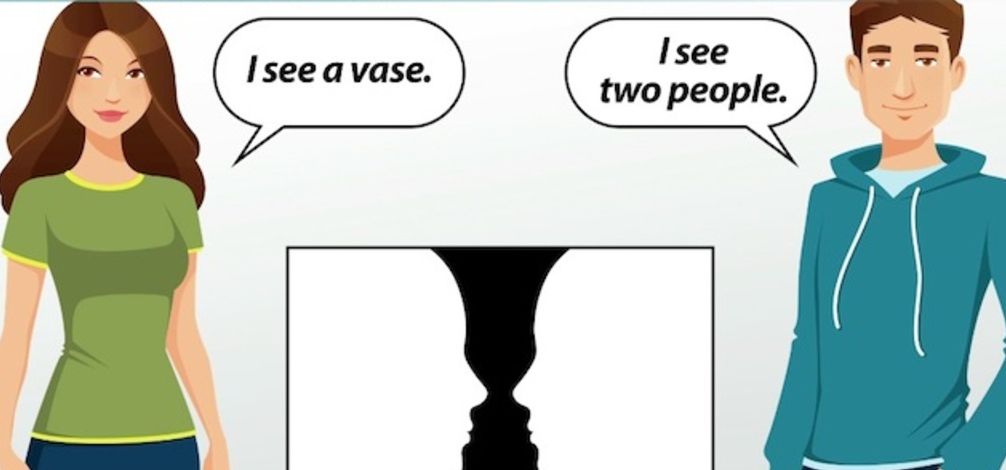
AI doesn’t “know” history; it predicts the next likely word based on a mathematical model. In oral history, this leads to “hallucinations” that can be dangerous for your data integrity:
- Proper Nouns: A machine might turn a local landmark or a family name into a common dictionary word.
- Technical Jargon: Specialized historical or sociological terms are often “corrected” by AI into something nonsensical.
- Homophones: AI frequently confuses “there/their/they’re” or “knows/nose,” forcing you to stay in a state of high-alert during the entire review process.
The Burden of “Diarization” (Speaker ID)
Diarization is the technical way of answering the question, “who spoke when?”
For oral history researchers, knowing who said what is foundational.
- AI Struggles: Machines often fail to distinguish between voices with similar pitches or struggle when speakers overlap (common in high-emotion interviews).
- The Human Edge: A professional transcriber uses logic and context to attribute speech correctly, even in noisy environments. Fixing misidentified speakers in a 90-minute AI transcript is a tedious, line-by-line grind that can lead to significant coding errors in your qualitative software.
Integrity and the “Acoustic Blur”

Oral history often happens in the field—cafes, living rooms, or porch steps.
- Background Noise: AI is notorious for failing when there is a hum of a refrigerator or the wind in the background. It creates an “acoustic blur” where the machine simply skips over words or provides a string of [unintelligible] tags.
- The Trained Ear: A professional human transcriber is trained to “lean into” the audio, using specialized equipment and experience to decipher muffled speech that a machine would simply delete.
Security and Ethical Compliance
Many “cheap” AI apps operate on public clouds where your data may be used to train future models. For researchers dealing with sensitive oral histories or IRB-protected data, this is a major red flag. Professional services offer NDA-backed confidentiality and secure, encrypted workflows that budget apps simply don’t prioritize.
Comparison: The Real Cost of 10 Hours of Audio
| Feature | Cheap AI Service | Professional Human |
| Upfront Cost | ~$60 | ~$900 |
| Correction Time | ~40-50 hours | ~1-2 hours |
| Labor Cost (at $25/hr) | $1,125 | $50 |
| Total Project Cost | $1,185 | $950 |
| Result | High Stress / Risk of Error | Archive-Ready / Peace of Mind |
The table demonstrates that while AI transcription has a lower upfront fee, the massive amount of time required to fix its errors makes it more expensive than professional service when labor costs are factored in. Ultimately, choosing a human professional saves both money and stress by delivering a ready-to-use document without the hidden burden of dozen of hours of manual correct.
The Bottom Line
In qualitative research, your time is your most valuable resource. When you pay for professional transcription, you aren’t just buying text; you are buying back your time to do the actual analysis you were trained for.
Ultimately, ‘cheap’ transcription is a gamble where the house always wins. By the time you’ve corrected the names, the dates, and the missed nuances, you’ve spent more than the cost of a professional. Don’t let a faulty start derail a meaningful project. For more on how professional-grade accuracy serves as the blueprint for your story, check out our previous post The Architecture of a Life: Why Professional Transcription Is The First Step in Writing a Memoir.
And always remember to be kind, stay positive and learn to unwind.