
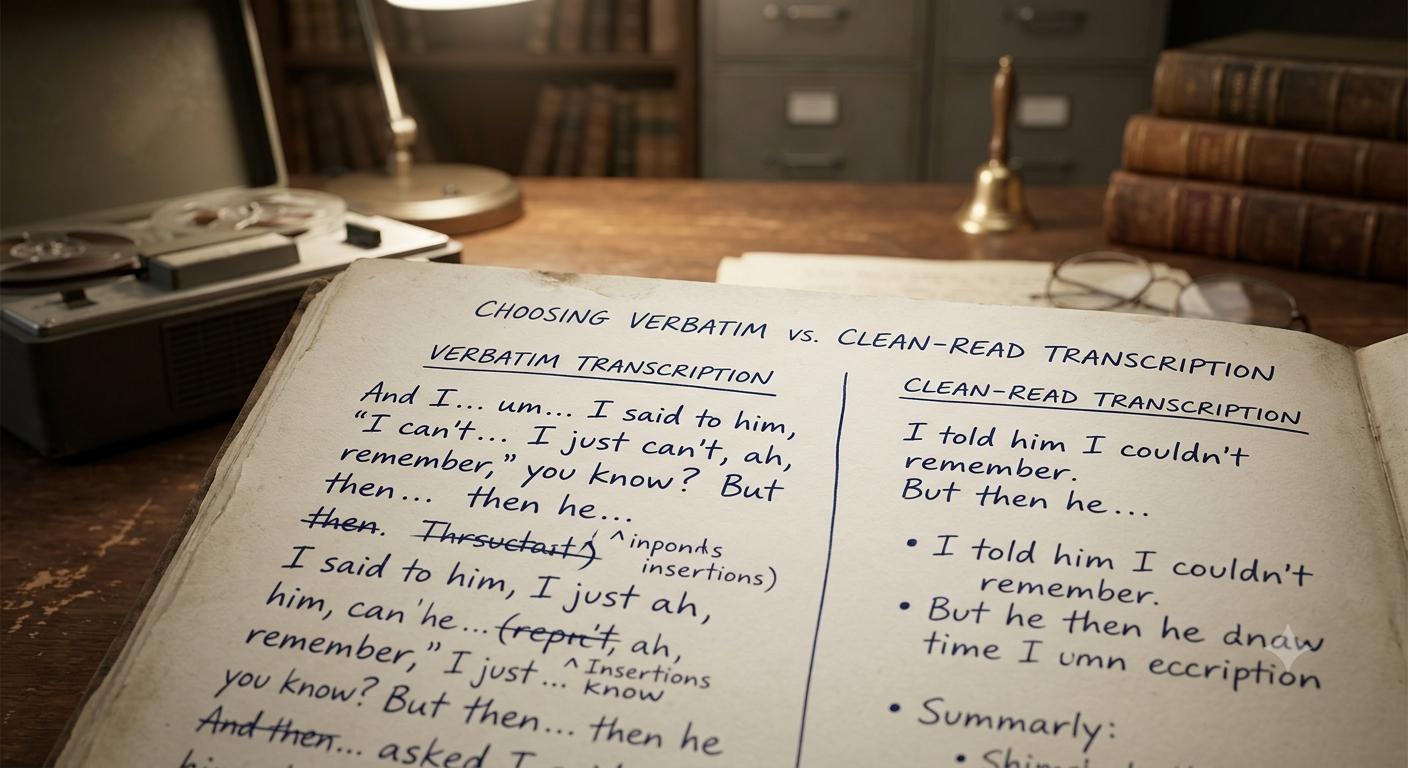
In the world of oral history, the transcription process is where the raw, ephemeral sound of a story meets the permanence of the written page. As you prepare your interviews for archiving or publication, one of the most critical decisions you will make is choosing between verbatim and clean-read transcription.
There is no “right” answer—only the right answer for your specific project. Here is a guide to help you choose.
1. Verbatim Transcription: The “Authentic” Archive
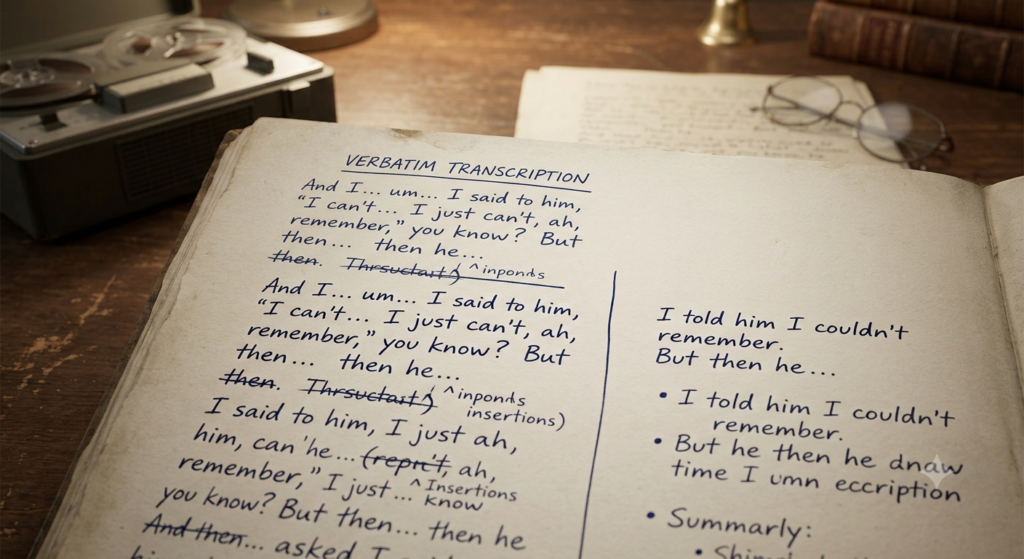
Verbatim transcription aims to capture every single utterance exactly as it is spoken. This includes “um,” “ah,” stuttering, false starts, and repeated phrases.
When to choose it:
Academic/Linguistic Research: If you are studying speech patterns, dialect, or the psychological nuance of how someone constructs a memory, you need every “um” and hesitation.
Legal or Forensic Contexts: Where exact phrasing could have legal implications.
Strict Archival Standards: Some institutions prefer raw data over edited narrative to ensure the interview remains in its most “pristine” unedited form.
The Trade-off: Verbatim can be difficult for a general reader to follow. It takes longer to read, and the “messiness” of human speech can sometimes distract from the emotional core of the story.
2. Clean-Read Transcription: The Storyteller’s Choice
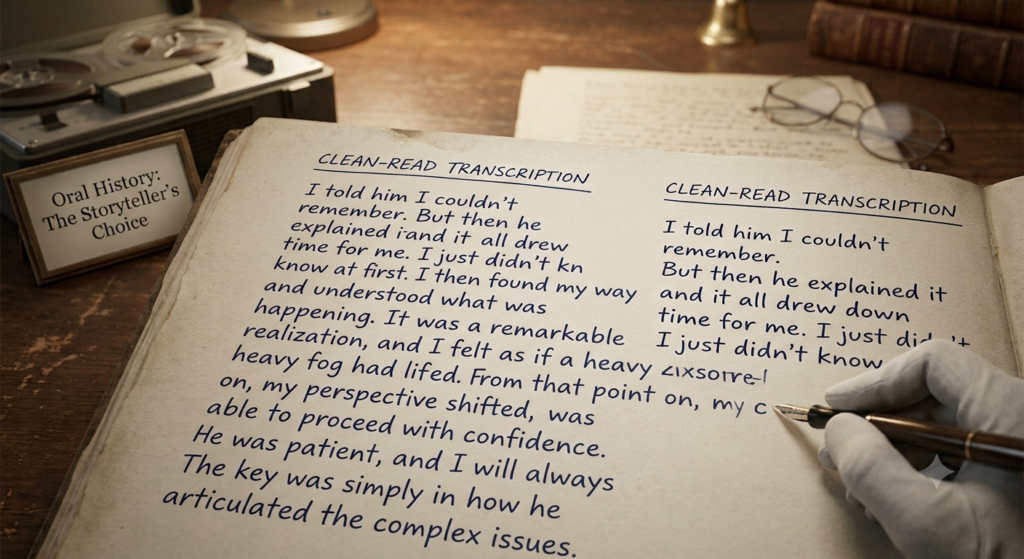
Clean-read (or “intelligent verbatim”) transcription removes the fillers, false starts, and repetitive stumbles of conversational speech. It preserves the speaker’s tone, dialect, and unique vocabulary while smoothing out the grammar for readability.
When to choose it:
Public History/Community Exhibits: If you want your interview to be accessible to a wide, general audience, clean-read is significantly more engaging.
Biographical Projects: If you are turning oral history into a book or published article, clean- read creates a polished, narrative-driven experience.
Accessibility: For readers with cognitive differences or those reading in a second language, clean-read is much easier to process.
Summary Comparison
| Feature | Verbatim | Clean-Read |
| Fillers (um, ah) | Included | Removed |
| False starts/restarts | Included | Usually edited out |
| Readability | Lower | High |
| Primary Goal | Documentation | Communication |
The Final Verdict
Before you commit, ask yourself: Who is the audience, and what is the primary purpose of this transcript? If the transcript is destined for a shelf in an archive to be pored over by future historians, lean toward verbatim. If the transcript is meant to be shared with family, a community organization, or a broader reading public, clean-read is almost always the better choice.
Ultimately, both methods preserve the most important thing: the voice of the narrator.