
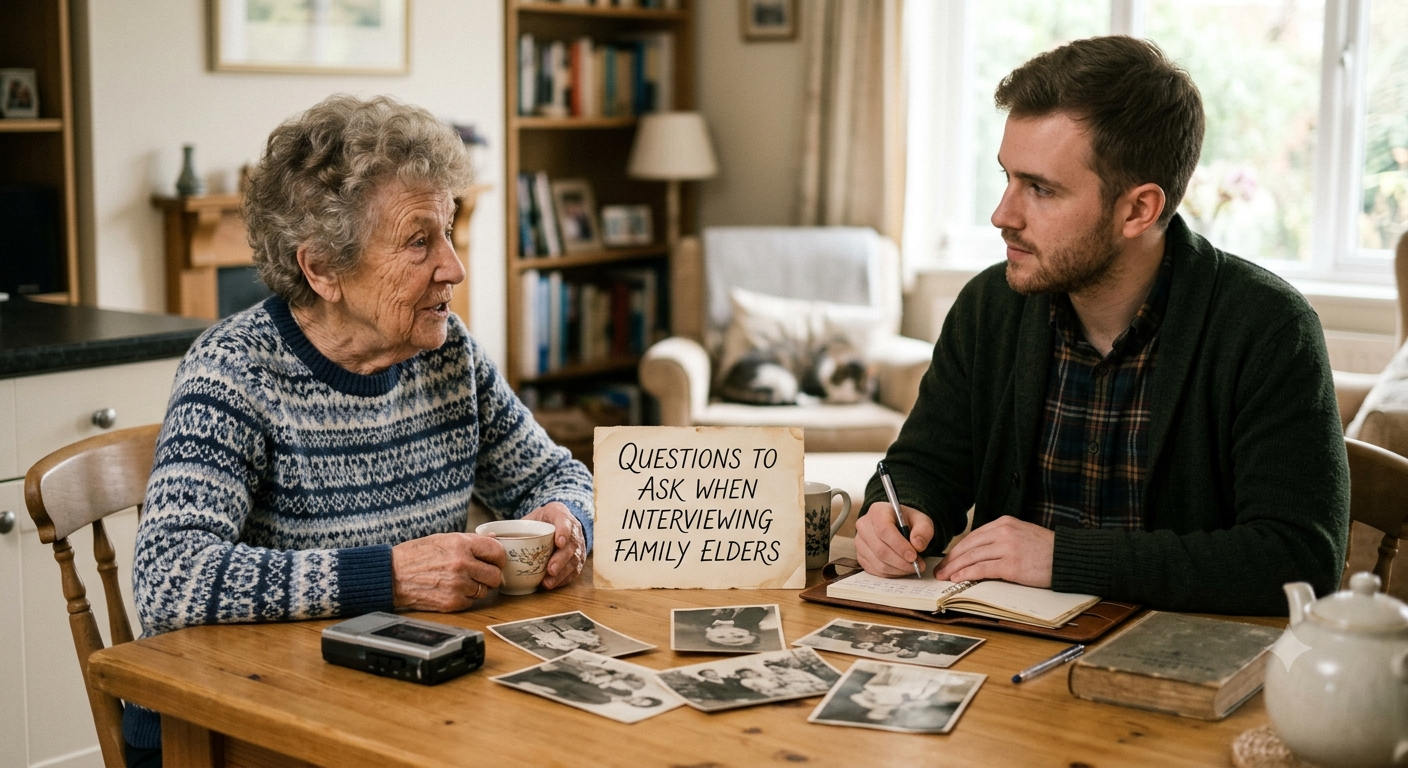
Have you ever wished you could hit “pause” on time? Our family elders are living, breathing libraries, holding the keys to stories, traditions, and memories that haven’t been written down anywhere else.
Interviewing a family member isn’t just about gathering facts for a genealogy chart; it’s about capturing their voice, their personality, and the wisdom they’ve gathered over a lifetime. If you’re ready to start recording your family’s history, here is a guide to get the conversation flowing.
1. Start with the “Early Days”
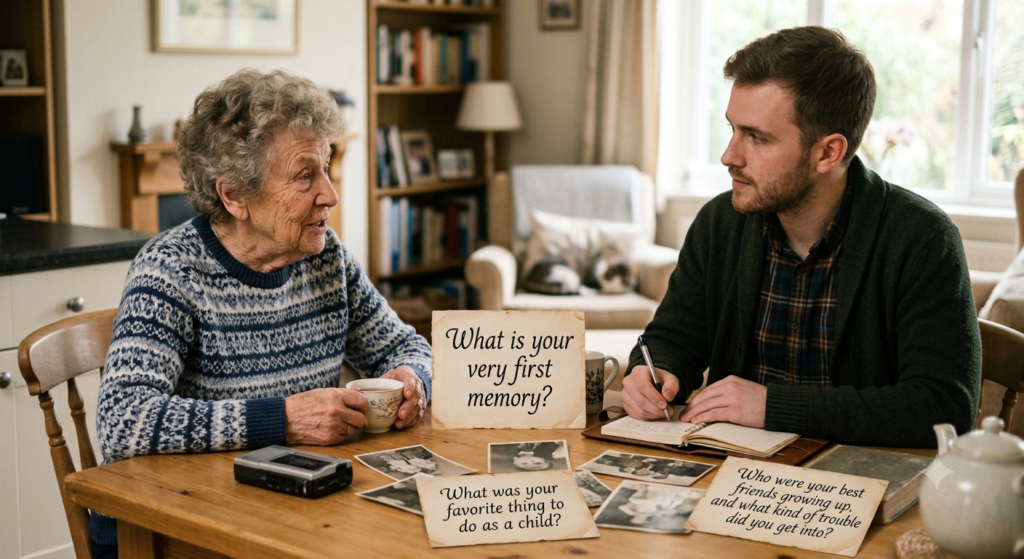
The best way to warm up is to take them back to their own childhood. This helps them get comfortable sharing stories before diving into more complex topics.
- What is your very first memory?
- What was your favorite thing to do as a child?
- Who were your best friends growing up, and what kind of trouble did you get into?
- What was your home like? What did it smell or sound like?
2. Uncover the “Turning Points”
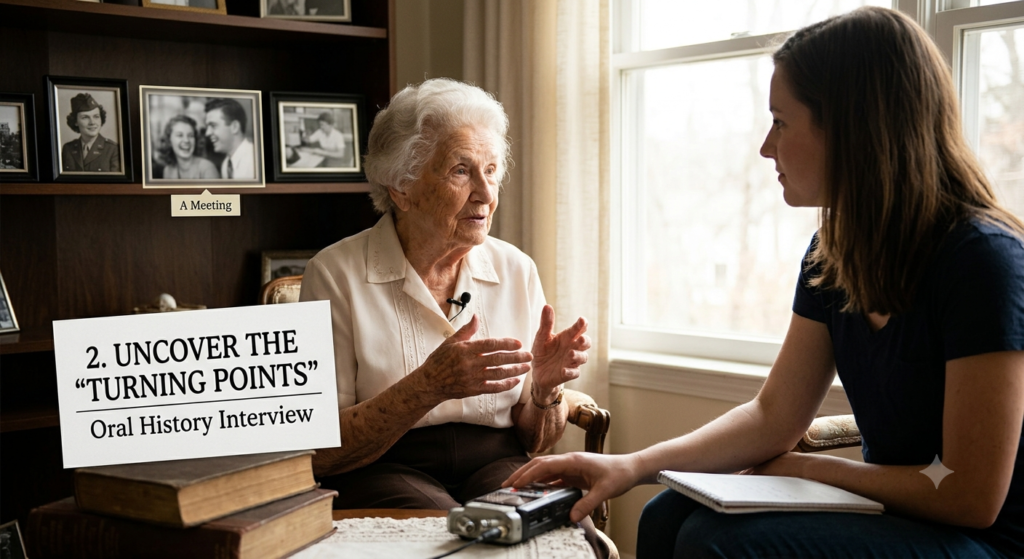
These questions help you understand the major milestones that shaped who they are today.
- What was the most significant world event you remember living through?
- How did you meet your spouse/partner? What was your first impression of them?
- What is the hardest decision you’ve ever had to make?
- What was your very first job? How did you spend your first paycheck?
3. Explore Traditions and Wisdom
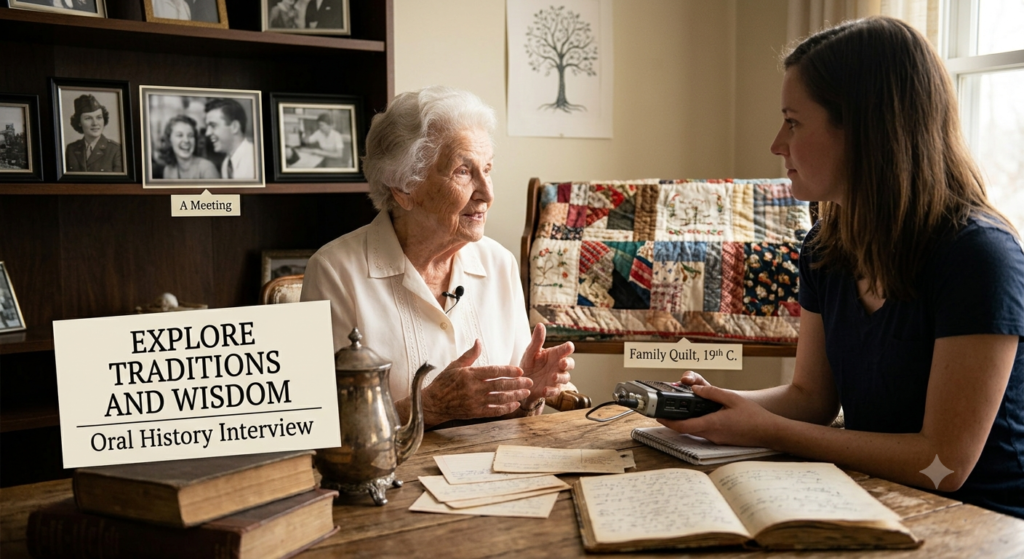
This is where you find the “hidden gems”—the values and habits that define your family identity.
- What are our family’s most important traditions, and how did they start?
- Are there any family recipes that have been passed down? What is the story behind them?
- What is the best piece of advice you’ve ever received?
- What do you hope the younger generations remember most about you?
Three Pro-Tips for a Great Interview
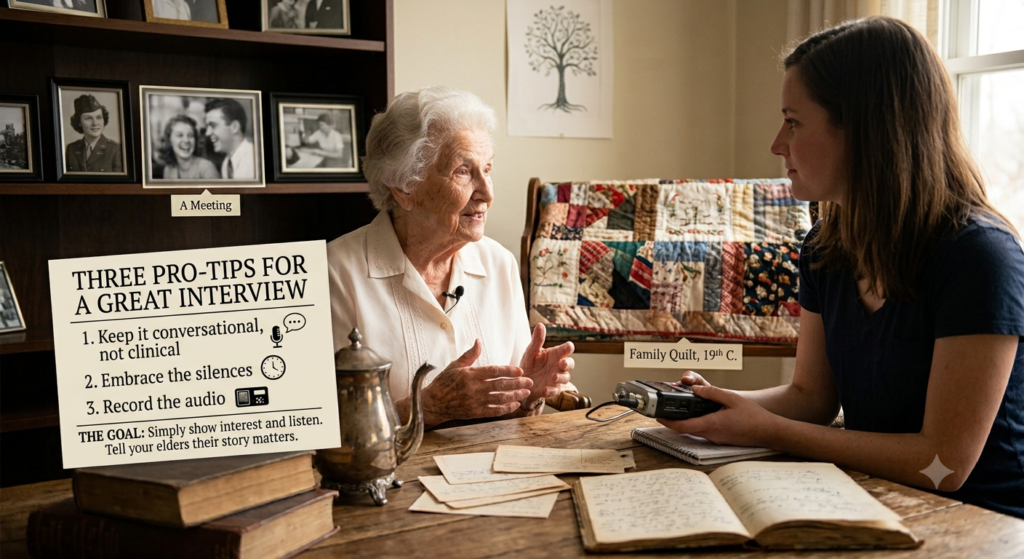
1. Keep it conversational, not clinical: Don’t just fire off a list of questions like you’re filling out a form. Use these as a starting point, and let their answers lead to new, unexpected questions.
2. Embrace the silences: Sometimes, when someone pauses, they are just digging deep to find the right memory. Give them time to think; the best stories often come after a quiet moment.
3. Record the audio (or video): Even if you take notes, there is something irreplaceable about hearing their laugh, their cadence, and the specific way they tell a story. Just be sure to ask for their permission first!
The Goal: Remember, there is no “right” way to do an oral history. Your goal is simply to show interest and listen. When you ask these questions, you are telling your elders that their life matters and their story is worth preserving.
Happy interviewing!