

Securing a research grant is a monumental achievement, but the real work often begins after the funding is secured. One of the most common pitfalls researchers face is underestimating the time and financial resources required to turn raw audio interviews into usable, searchable, and preserved data.
If your project relies on oral history, transcription is not a luxury—it is a critical research expense.
When crafting your grant proposal, you should never treat transcription as an afterthought. Instead, frame it as a vital component of your project’s integrity, accessibility, and long-term impact. Here is how you can strategically write transcription costs into your next research grant.
1. Define Transcription as “Data Processing,” Not Just “Typing”

Reviewers often undervalue transcription because they view it as administrative “typing.” To increase your chances of funding, pivot the language. Describe transcription as primary data processing or qualitative data preparation.
Why it matters: Clearly articulate that professional transcription turns ephemeral audio into an archival-quality document. This makes the data searchable, linkable, and compliant with academic standards for secondary analysis.
2. Differentiate Between “Draft” and “Archival” Transcripts
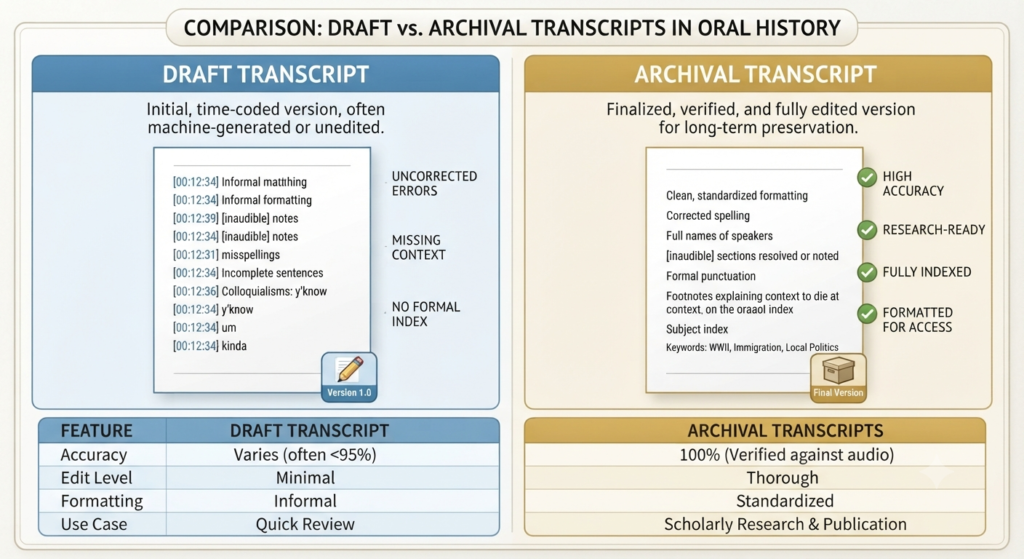
Not all transcripts are created equal. Explain that your project requires verbatim, research-grade transcripts rather than automated, AI-generated drafts.
The justification: Emphasize that in oral history, the “how” is just as important as the “what.” Professional human-led transcription captures nuances, non-verbal cues, and emotional context that algorithms routinely miss. This level of accuracy is essential for historical scholarship.
3. Account for the “Human Element” in Your Budget
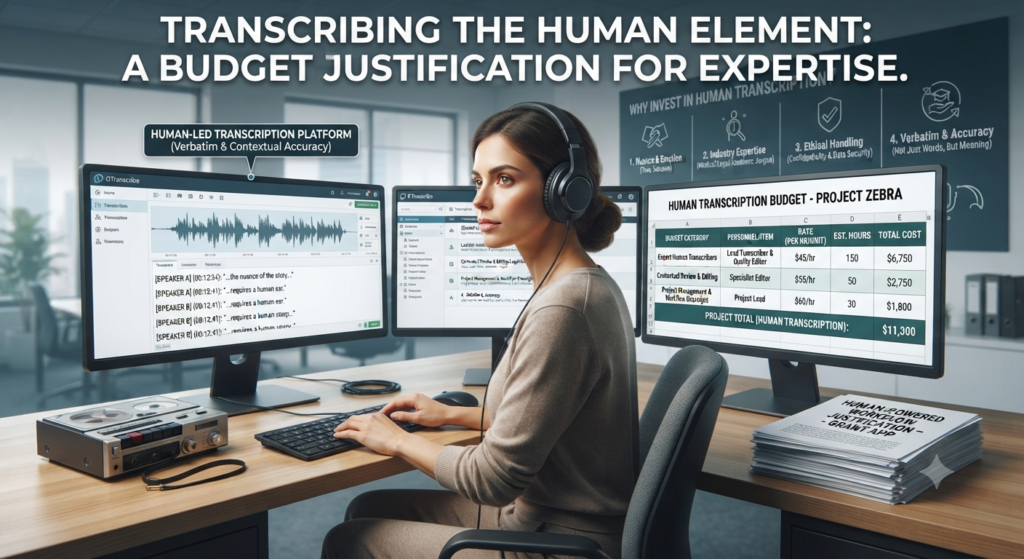
Don’t just guess a round number. Break down your costs clearly to show you have done your due diligence. A transparent budget builds trust with grant committees. Consider including:
Audio-to-text ratio: Explain that one hour of recorded audio typically requires 4–6 hours of professional transcription time.
Quality Assurance: Include costs for proofreading and verification against the original audio.
Accessibility: Mention that accurate transcripts make your research accessible to researchers and community members with disabilities, aligning with modern DEI (Diversity, Equity, and Inclusion) grant requirements.
4. Highlight Long-Term Archival Value
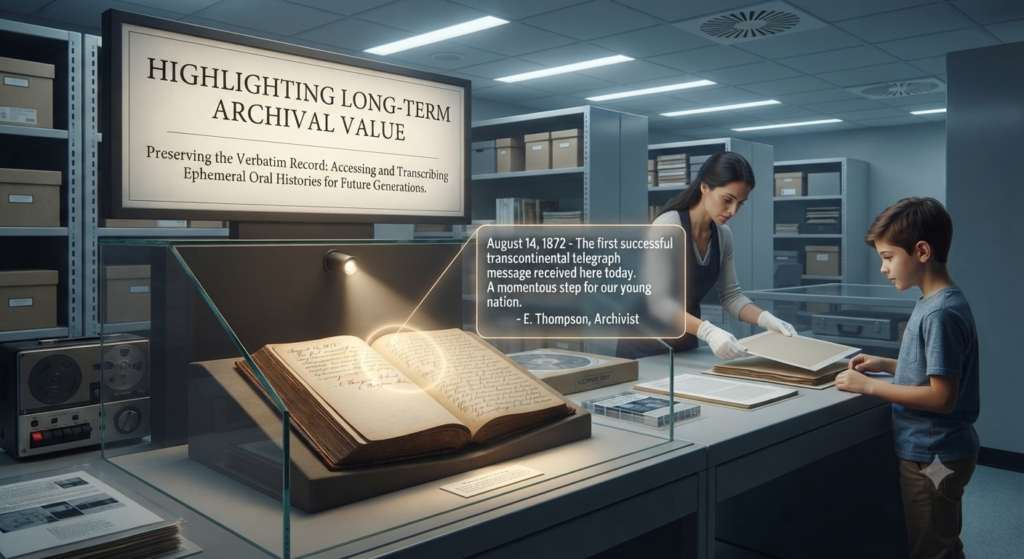
Grantors love to see “return on investment.” Explain how these transcripts will live beyond your current project.
The Pitch: By including transcription costs in your grant, you are not just funding your own work; you are building a permanent archive that will benefit future historians, sociologists, and the communities involved. High-quality transcripts are the “gold standard” for sustainable digital humanities.
5. Leverage Privacy and Data Ethics

In an era of heightened awareness regarding data privacy, professional transcription services often provide better security and confidentiality protocols than DIY methods or unsecured free tools. Frame the hiring of a professional transcription service (or specialized firm) as a proactive measure to protect participant data and ensure informed consent compliance.
Final Tips for Your Budget Narrative

Be Specific: Instead of a line item titled “Transcription,” use “Professional Qualitative Data Transcription & Archival Preparation.”
Prioritize Quality: If a reviewer asks why you didn’t choose the cheapest option, respond with: “The integrity of the historical record depends on the accuracy of the source material. We have budgeted for professional-grade accuracy to ensure the longevity and reliability of this archive.”
By treating transcription as the core research infrastructure that it is, you show grant committees that you are a serious researcher committed to quality, ethics, and the preservation of history.