
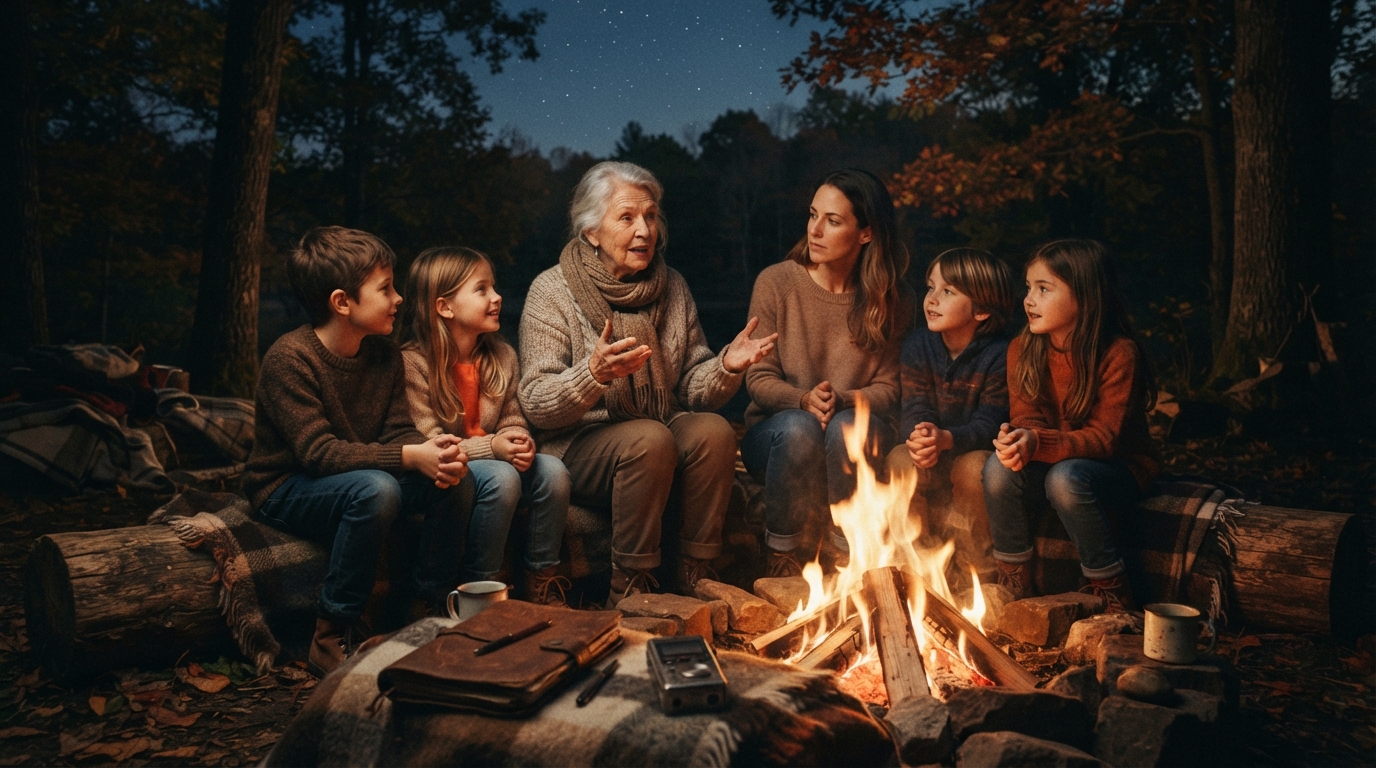
Every October, the same thing happens. The nights grow longer, the air turns cool, and someone says, “Did you ever hear what happened in the old house at the end of our road?”
Before there were horror films, podcasts, or pumpkin-spice anything, there were voices in the dark. Halloween’s oldest roots lie in Samhain, the Celtic festival marking the turn from harvest to winter, when people believed the boundary between the living and the dead grew thin. Nobody wrote those beliefs down at the time. They survived because someone told them, and someone else listened, remembered, and told them again.
That is oral history in its purest form.
The Ghost Story as Living Archive
We tend to think of ghost stories as entertainment, but look closer and they work like historical records. A tale about a haunted bridge may carry the memory of a real accident. A warning about a woman who walks the road at midnight may preserve a community’s grief, its fears, or the rules it once lived by. Folklore often holds the facts that official records never captured: who was lost, what was feared, and how people made sense of it.
When an elder tells a spooky story from their childhood, they are also telling you what the village looked like, how people traveled after dark, what they believed, and who they trusted. The “scary” part is simply the doorway.
Why the Telling Matters as Much as the Tale
Anyone who has listened to a good storyteller knows that the words are only part of it. The pause before the twist, the lowered voice, the laugh that breaks the tension, these are all part of the record. This is why oral historians value recording and carefully transcribing spoken memories rather than summarizing them. A transcript that keeps the rhythm, the dialect, and the hesitations preserves something a tidy paraphrase would erase.
Every retelling also changes a story slightly. Details shift, names change, endings grow. Oral historians don’t treat this as a flaw. The variations show what each generation chose to hold onto, and what they needed the story to say.
A Different Kind of Halloween Tradition
Halloween is a perfect excuse to start collecting the stories already living in your family:
- Ask for the spooky story. What was the scariest tale your grandparents were told as children?
- Ask about the festival itself. How did people mark the season of remembering the dead when they were growing up?
- Ask about the place. Is there a corner of the neighborhood with a story attached to it?
- Record it. Use your phone, and ask permission first. A voice is far harder to recreate than a plot.
- Keep the details. Note the date, the speaker’s name, and where the story was told.
The people who carry these stories won’t be here forever, and a story that is never spoken aloud again is a story lost. This October, the most valuable thing you can bring to the table might not be candy. It could be a question, and the patience to hear the answer.
So, tell us, what is the one spooky story passed down in your family or community, and who was the person who first told it to you? Share your experiences in the comment section below and we just might feature your story in our next blog post this October on spooky generational stories.
Coming up next on our blog, we’ll be marking Mental Health Month with a closer look at how sharing our stories can support healing and connection. We hope you’ll join us and look forward to having you with us.
Remember, be kind, stay positive and learn to unwind.