
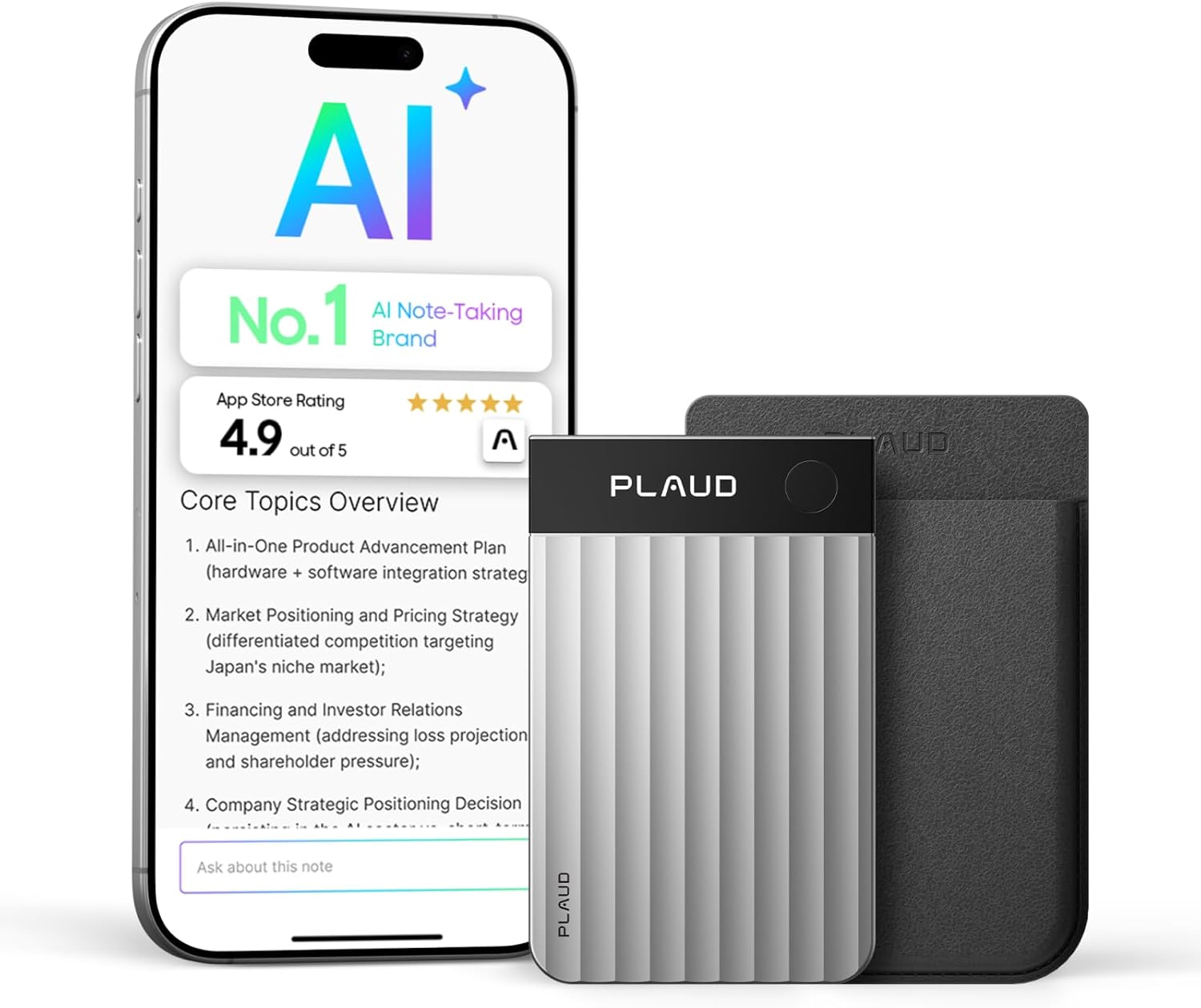
In the rapidly evolving world of digital storytelling and archival work, we are constantly discovering new ways to preserve history. You have likely heard of the recent surge in AI transcription tools designed to convert spoken word into text—platforms like Otter.ai, Rev, and Descript have certainly made their mark. While these tools offer incredible speed, today I want to focus on the hardware side of the equation: Plaud AI.
The Plaud brand offers several variations, including the Plaud Note, Plaud Note Pro, Plaud NotePin, and the Plaud Note PinS. However, today we shall be focusing on the model I have found to be the most popular among fellow creators: the Plaud Note Pro.
Introducing the Plaud Note Pro
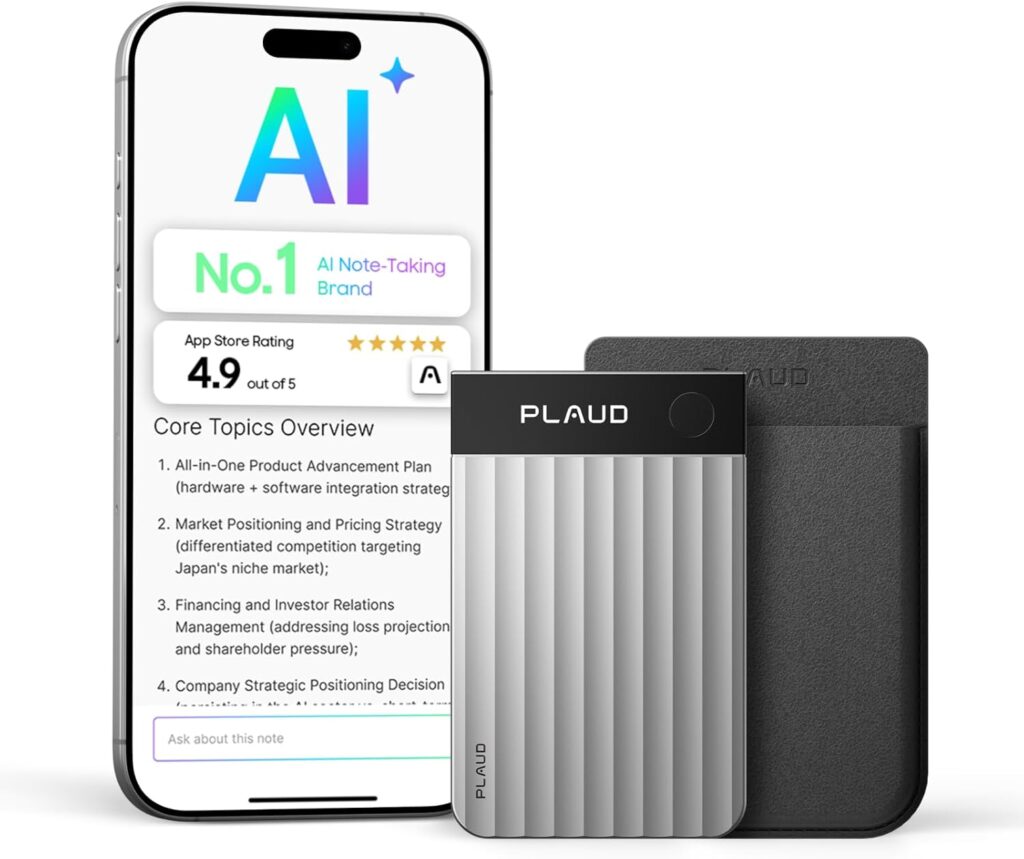
The Plaud Note Pro is a credit-card-sized AI voice recorder that bridges the gap between traditional hardware and modern cloud-based AI. Retailing at $189 on Amazon.com, this device is designed to be worn or carried discreetly. At just 0.12 inches thin and weighing about 1.06 oz (30 grams), it allows you to capture oral history interviews without the bulky setup of traditional recorders
What’s Included in the Box?
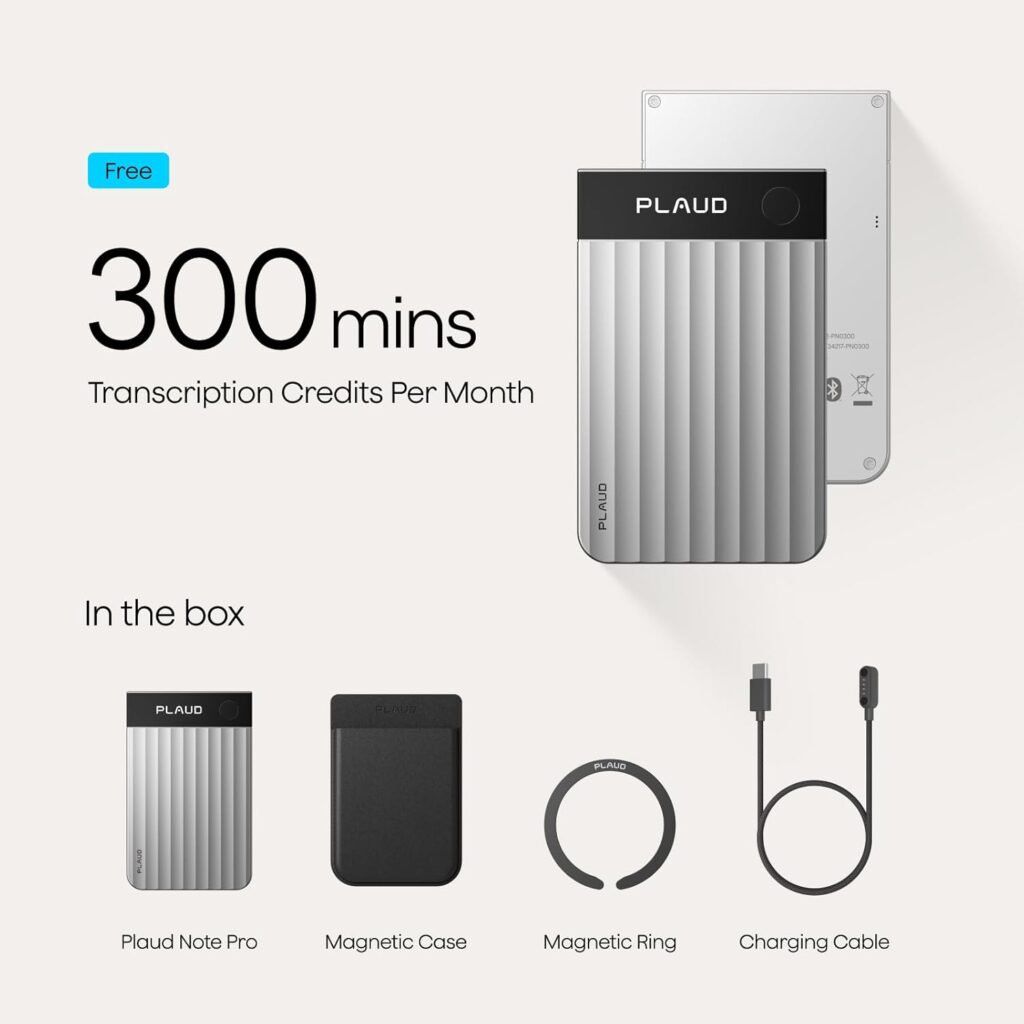
The Plaud Note Pro comes with everything you need to start recording and transcribing right out of the box, including
- Plaud Note Pro device Silver or Black
- Magnetic case for protection and portability
- Magnetic charging cable
- Magnetic ring for easy handling
- Quick Start Kit (User Guide + Safety & Warranty Guide)
- Free Starter Plan (300 AI transcription minutes per month)
Power, Charging, and Modes
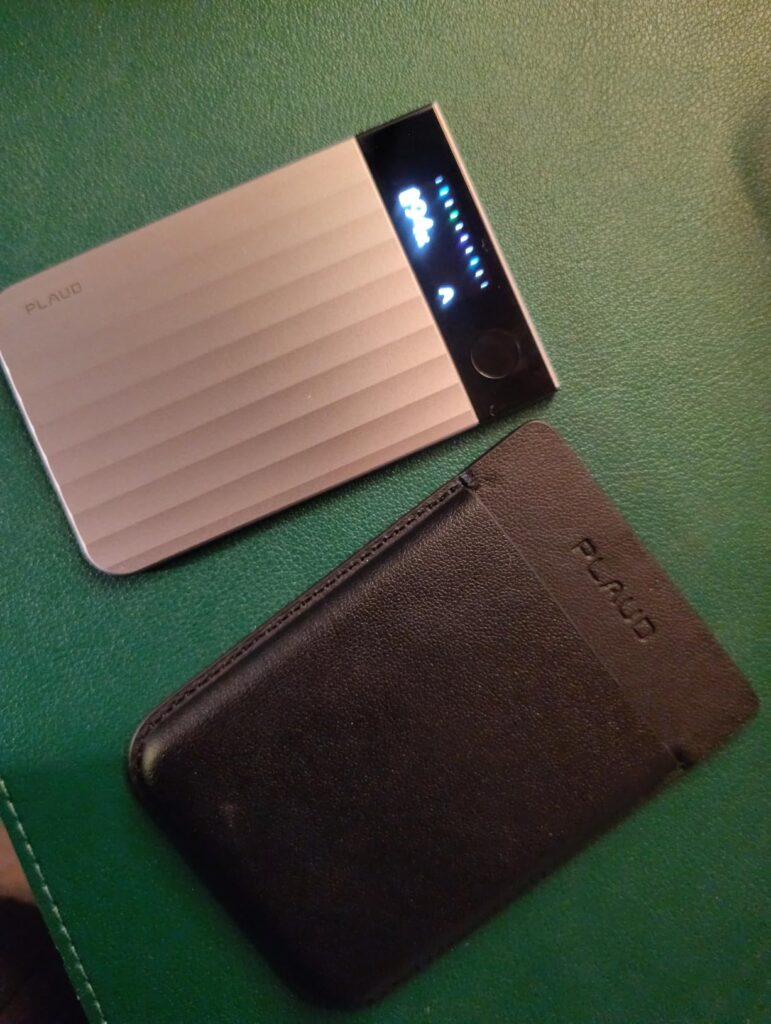
The Plaud Note Pro offers two recording modes to suit your needs: a standard mode providing approximately 30 hours of battery life, and an endurance mode offering up to 60 hours.
To charge the device, a few hours are required when using a standard USB power source with the included magnetic charging cable. For faster recharging, it is recommended to use a USB-C power adapter (like a fast charger) rather than a basic 5W charger. Please note that the device is not designed to be actively used while connected to the charging cable, so it is best to charge it fully beforehand. For extended travel or all-day use away from wall outlets, you can use any standard USB power bank (with a USB-A or USB-C port) by connecting the magnetic charging cable directly to the power bank and attaching it to your device.
Key Features
Audio Range & Clarity: The Plaud Note Pro features dual directional microphones capable of picking up audio from up to 16.4 feet (5 meters) away. This makes it ideal for conference rooms, classroom lectures, or meetings. For optimal performance, the device should have a clear line of sight to the main speaker, and placing it on a table in the center of the room works best
Wearable & Discreet Design: The device is designed to be worn and discreet, making it barely noticeable.
- Magnetic Ring: Included in the box, it lets you attach the device magnetically to your clothing, bag strap, or lanyard for hands-free wear.
- Magnetic Case: Doubles as a carry case and can be clipped or attached to keep it accessible.
Multimodal Input: Capture audio while typing notes or snapping photos for deeper context.
Advanced Summarization: Utilize top-tier AI models to generate structured mind maps, To-Do lists, and industry-specific summaries.
“Ask Plaud” Integration: Interact with your recording to ask the AI specific questions, extract key themes, or draft email follow-ups.
Understanding Your Plaud Subscription Options
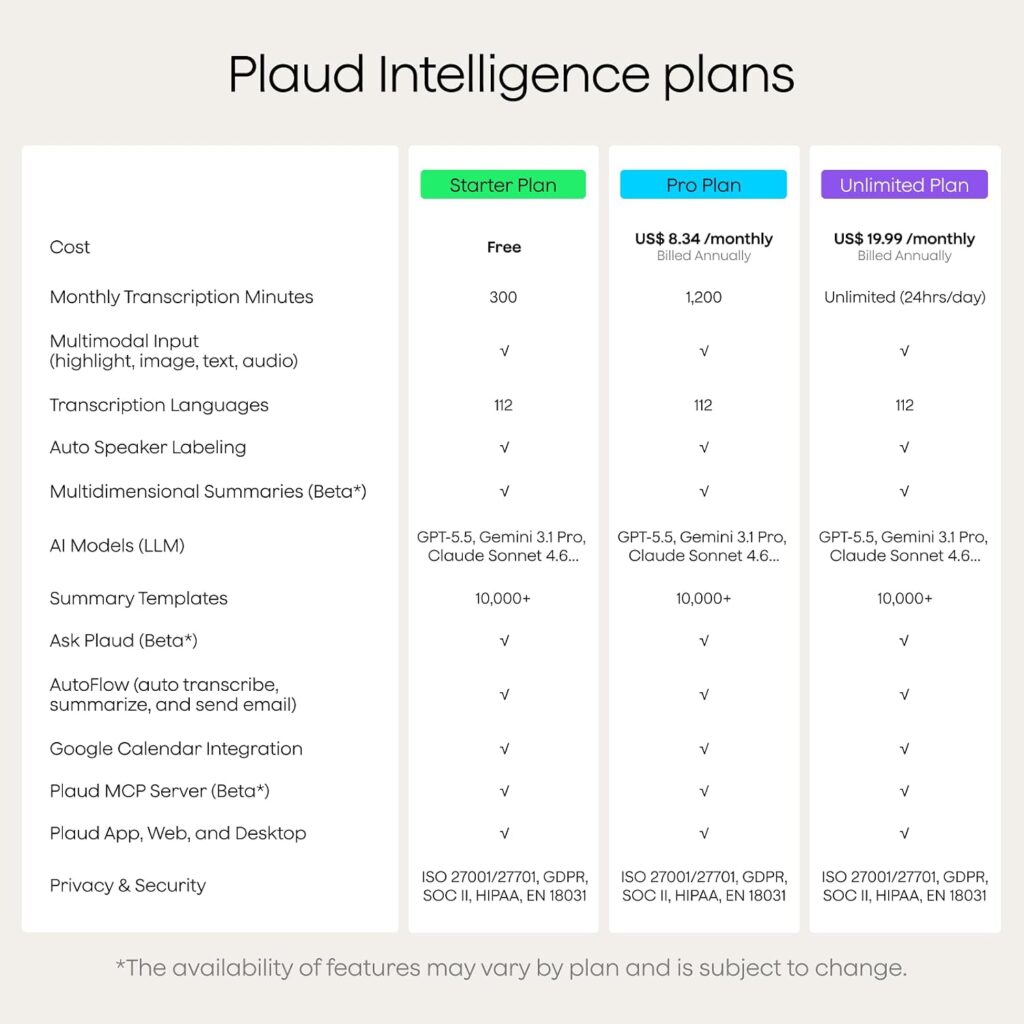
Choosing the right subscription plan depends entirely on the volume of your oral history projects. Here is a breakdown of the Plaud Intelligence subscription plans for the Plaud Note Pro.
Starter (Free): Included automatically with every device; provides 300 transcription minutes/month. You get full access to Plaud Intelligence features (AI summaries, Ask Plaud, 10,000+ templates) with no credit card required.
Pro Plan: Offers 1,200 transcription minutes/month for $17.99/month or $99.99/year (save ~54%). All Plaud Intelligence features are included.
Unlimited Plan: Provides unlimited transcription (up to 24 hrs/day) for $29.99/month or $239.99/year. This is best for heavy users recording multiple long meetings daily.
Team Plan: Offers per-seat pricing for organizations. Includes a shared team workspace, centralized admin, and up to 24 hrs/day transcription per seat.
According to those who have purchased and used Plaud, it elevates productivity and performance.
Operational Realities and Considerations
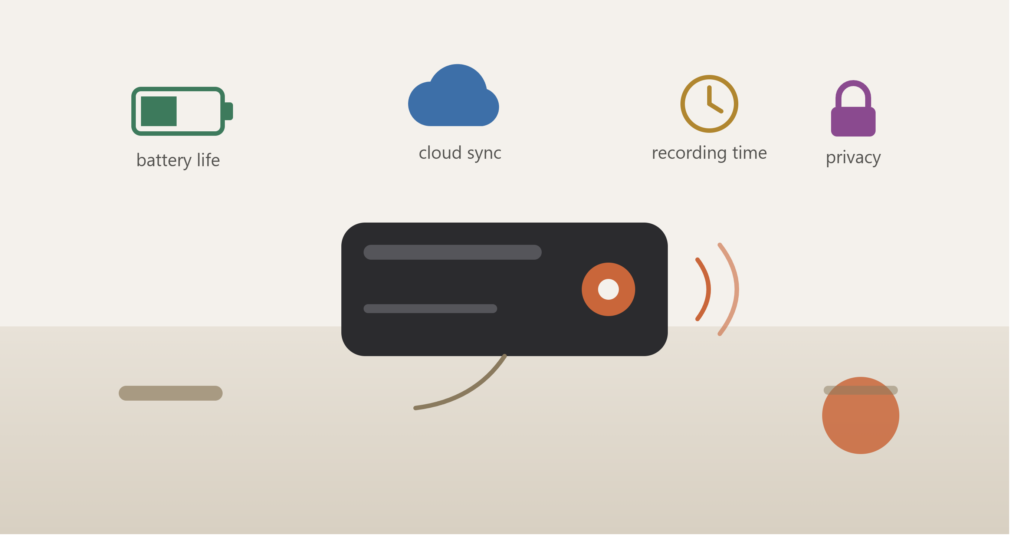
While most customers (92%+) are satisfied with transcription quality, it is important to be aware of certain limitations and operational realities of the Plaud Note Pro system:
Subscription & Minute Limits: The free Starter Plan provides only 300 minutes/month—roughly 5 hours—which can be exhausted quickly. Unused minutes do not roll over, and significant usage requires a paid plan.
No Real-Time Transcription: Transcription is not live; you must sync recordings to the app via Bluetooth after the session.
Internet Dependency: Files require a Wi-Fi or cellular connection for cloud-based processing; there is no offline transcription capability.
Language & File Constraints: The system processes only one language per recording, and all files must be synced via Bluetooth as wired USB transfers are disabled for security reasons.
Privacy & Speaker Labeling: The device remains in a standby state by design, which has raised ethics concerns for some users. Additionally, speaker labeling can be inconsistent, with some users reporting that the device occasionally misidentifies participants in a conversation.
The Plaud Note Pro is a small, easy-to-misplace device: Because it’s designed to be discreet and portable, it can slip into a bag pocket, get left behind at an interview site, or go missing between sessions — and unlike a phone, it’s not something you’ll notice missing right away since it isn’t a device you check constantly throughout the day. For oral history work, where a single recording session may be irreplaceable, that’s a real risk worth building safeguards around (a backup recording method, a dedicated case, or a habit of double-checking it’s packed before leaving an interview
Where the Plaud Note Pro Falls Short for Oral History Work
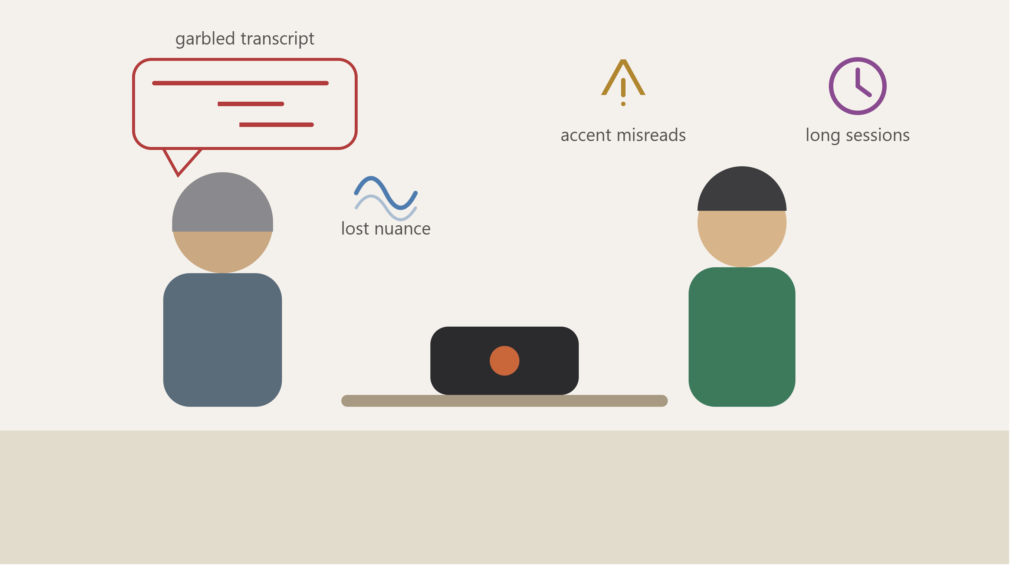
The device’s marketing examples—conference rooms, classroom lectures, business meetings—describe fairly controlled environments. Oral history interviews rarely happen in those conditions, and several of the Plaud Note Pro’s limitations become more pronounced once you take it into the field.
Older and Softer-Spoken Narrators: Many oral history subjects are elderly, and speech patterns common to this group—quieter volume, slower pacing, occasional trailing off—can be harder for the AI to transcribe accurately than the brisk, clear speech of a business meeting.
Accents, Dialects, and Heritage Languages: Oral history projects often center on regional, immigrant, or otherwise underrepresented voices with strong accents or dialect features. Because the underlying language model processes only one language per recording and is tuned toward more standard speech patterns, transcription errors tend to increase with narrators whose speech falls outside that norm.
Overlapping Voices in Family Settings: Interviews in living rooms or at family gatherings often involve several relatives chiming in at once. This kind of cross-talk compounds the speaker-labeling inconsistencies already noted above, making it harder to keep track of who said what.
Uncontrolled Recording Environments: Kitchens, porches, and outdoor settings introduce background noise—clattering dishes, pets, traffic—that the device’s ideal-use guidance (clear line of sight, quiet conference room) doesn’t account for. Real-world oral history conditions can meaningfully degrade transcription accuracy compared to the controlled settings used in the product’s own examples.
Specialized and Historical Vocabulary: Family names, place names, and community- or era-specific terminology are common in oral history interviews but are unlikely to appear in a general-purpose AI model’s training data, which can lead to more frequent “hallucinated” or garbled entries than the marketing materials suggest.
Sensitive Subject Matter and Cloud Storage: Oral histories frequently touch on trauma, family secrets, or culturally sensitive material. Because transcription requires uploading audio to the cloud, narrators from communities with legitimate reasons to distrust third-party data handling may be understandably hesitant to participate.
Long-Form Interviews vs. Minute Caps: A single oral history sitting can easily run two to four hours. On the free tier, that alone could exhaust most or all of the monthly 300-minute allowance in one session, forcing historians onto a paid plan far sooner than the casual note-taker the free plan seems designed for.
Why Oral Historians Need a Human Editor
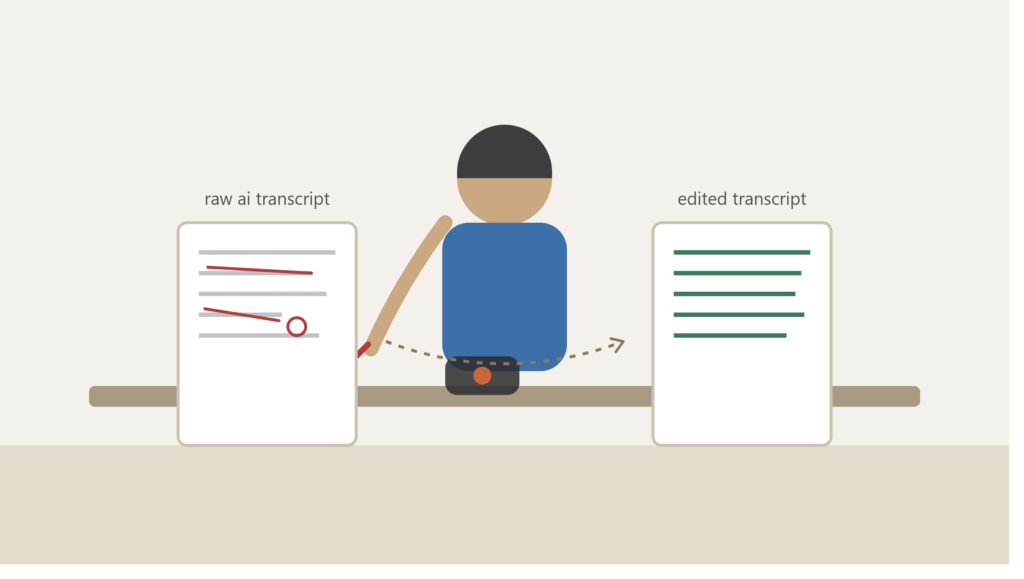
Despite its impressive technology, AI is an assistant, not a replacement for a human professional.
If you are a busy podcaster or historian, here is why having a human transcriber review your Plaud-generated draft is a game-changer:
Nuance and Emotional Cadence: AI is excellent at literal transcription, but it can miss the emotional weight and cultural context behind the spoken word. A human eye ensures that the soul of the history is preserved.
Correcting Speaker Identification: Given the reported inconsistencies in speaker labeling, a human editor is vital to ensure the correct attribution of every voice in your oral history project.
Time-Saving Efficiency: Correcting “hallucinated” words or formatting errors takes time. By outsourcing the proofreading to a professional, you save yourself hours of tedious editing, allowing you to focus on producing high-quality content.
Final Thoughts

The Plaud Note Pro is a fantastic asset for anyone looking to streamline their workflow, provided they approach it with a clear strategy. By using AI to handle the heavy lifting of raw transcription and pairing it with a professional human editor to handle the nuances of storytelling, you can create archives that are not only accurate but truly meaningful for generations to come