
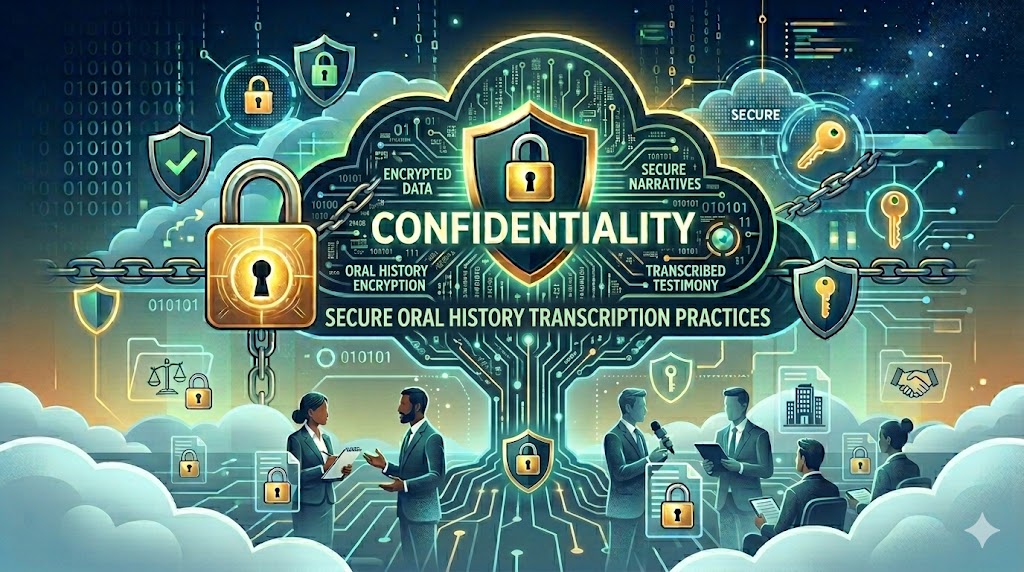
Oral history is, by its very nature, deeply personal. Whether it’s a whistleblower sharing corporate insights, an activist detailing political movements, or an individual sharing intimate family traumas, high-stakes interviews capture raw, unfiltered truth.
But in an era where data breaches make daily headlines and “the cloud” handles almost all our digital interactions, a critical question arises: How do we preserve these vital human stories without risking the privacy of the people who tell them?
For researchers, historians, and legal professionals, data security isn’t just a technical checkbox—it is a foundational ethical duty. Here is how modern oral history transcription must adapt to protect high-stakes narratives in a cloud-first world.
1. The Vulnerability of the Modern Transcript

Moving away from physical tapes has made sharing audio incredibly easy, but it has also introduced new vulnerabilities. A digital file passes through multiple touchpoints:
- The initial upload from a recording device.
- Cloud storage servers.
- The transcription interface.
- The final delivery via email or download link.
Every single one of these steps requires active protection. If a file is intercepted or stored on an unencrypted server, a narrator’s anonymity can be compromised instantly.
2. Best Practices for Cloud-Age Data Privacy
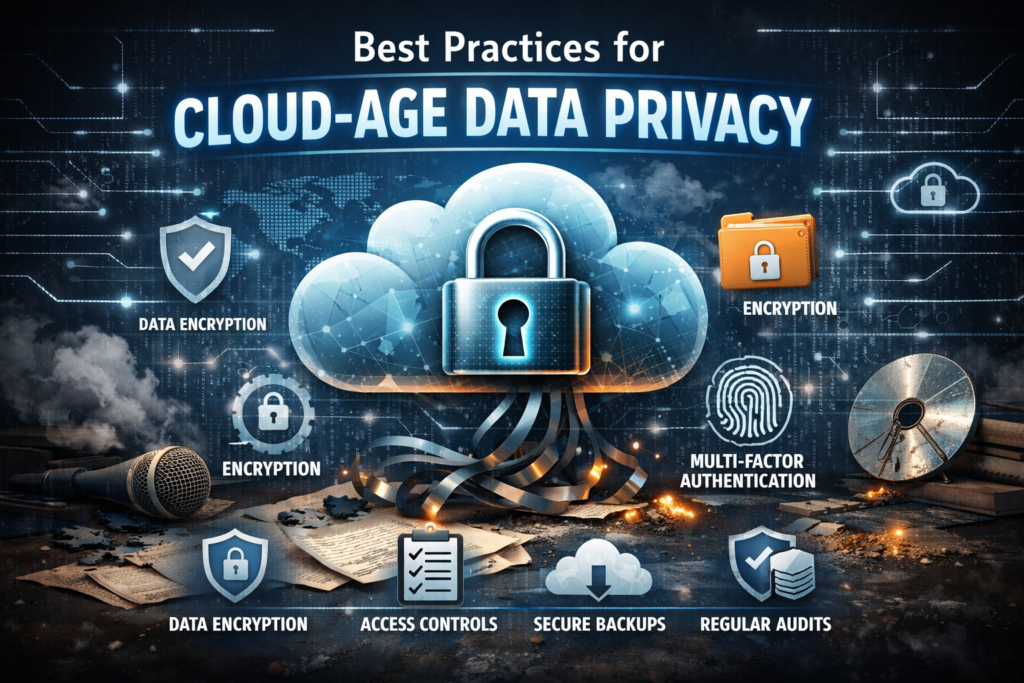
Ensuring absolute confidentiality requires a combination of strict technical safeguards and human ethics. When handling sensitive oral histories, these four pillars are non-negotiable:
End-to-End Encryption (AES-256)
Data must be protected both in transit (while it is being uploaded) and at rest (while stored on a server). You should always look for services utilizing AES-256 encryption, which is the gold standard used by banks and government agencies globally.
To verify a service actually uses this standard, look for these indicators:
- The Security or Compliance Page: Reputable providers will explicitly state “AES 256-bit encryption” in their privacy policies or security documentation.
- Enterprise-Grade Cloud Backing: Check if the service hosts data on secure infrastructure like Amazon Web Services (AWS), Google Cloud, or Microsoft Azure, which default to AES-256 for data at rest.
- The Padlock Icon (TLS/SSL): Ensure the web address begins with https:// (the “s” stands for secure). This means TLS or SSL encryption is active.
What are SSL and TLS? Think of SSL (Secure Sockets Layer) and its newer, stronger successor, TLS (Transport Layer Security), as a digital armored car. When you send an audio file over the internet, it doesn’t just fly through the air unprotected. SSL and TLS wrap your file in a secure, locked box at your computer, drive it safely across the internet, and only unlock it when it safely reaches the transcription server. It stops digital eavesdroppers from peeking at your data while it’s on the move.
Strict Access Control
Not everyone on a team needs to see every file. High-stakes transcription protocols should rely on the principle of least privilege (PoLP), meaning only the specific professional working on the file can access it. Multi-factor authentication (MFA) should be mandatory for any platform storing these files.
Comprehensive NDAs & Legal Safeguards
Technology is only half the battle; human compliance is the other. Professional transcriptionists handling high-stakes material must be backed by legally binding Non-Disclosure Agreements (NDAs).
Secure File Destruction
Once a project is complete, verified, and safely in the hands of the client, the original audio and temporary transcript files should not linger on third-party cloud servers indefinitely. A strict, documented data retention and deletion policy is essential.
3. The Human Factor: AI vs. Human Transcription
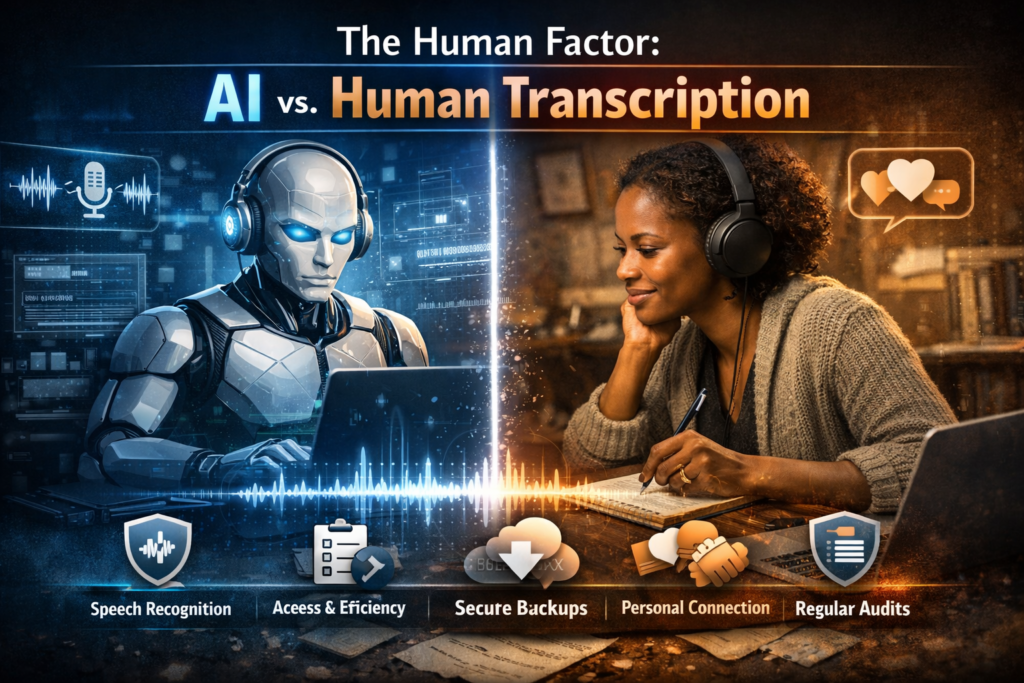
While automated AI transcription tools are fast, they present unique privacy challenges in the cloud age. Many free or low-cost AI tools use your uploaded audio to “train” their models, meaning your sensitive data could theoretically leak into the software’s future logic.
The Privacy Advantage: Working with a dedicated, professional human transcriptionist ensures that your files are handled within a closed, secure ecosystem—never fed into public machine-learning loops.
Trust is the Foundation of Every Story
An interview subject can only be truly open when they feel completely safe. By prioritizing robust cloud security and strict confidentiality protocols, we don’t just protect data—we protect the trust that makes oral history possible in the first place.
If you are preparing a high-stakes interview project and need a transcription partner who treats data privacy as an absolute priority, get in touch with Jofranlu.com Transcription Services for all your oral history transcription needs. Let’s connect to discuss a customized security protocol for your project.